How we use AI
We design acoustic enclosures with AI, BIM and flow simulation (CFD). It makes us faster and more thorough – responsibility for every enclosure stays with the engineer.
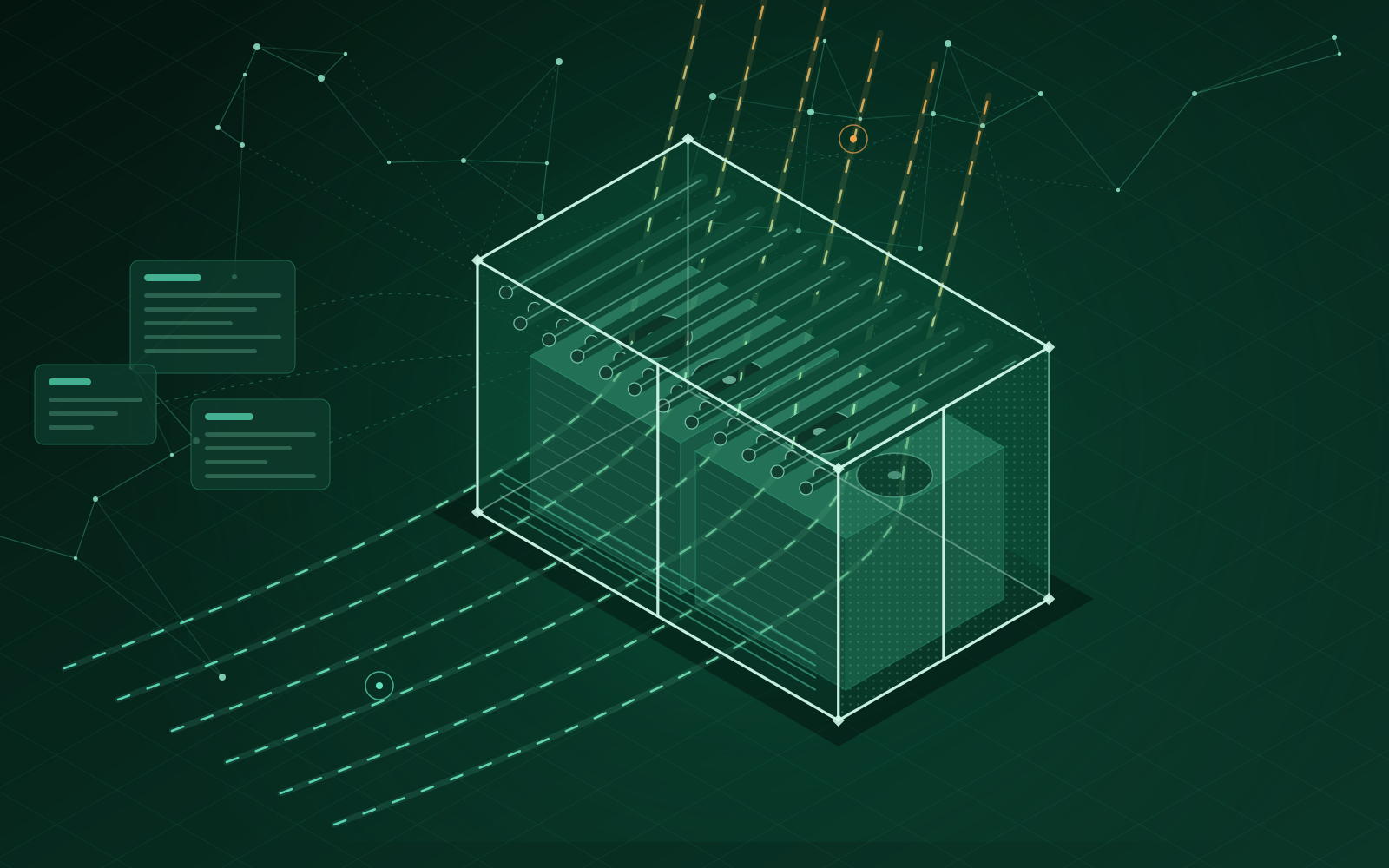
What we use AI for.
AI takes over the time-consuming routine work, leaving more time for the questions that make a good enclosure.
Quiet – without overheating the unit.
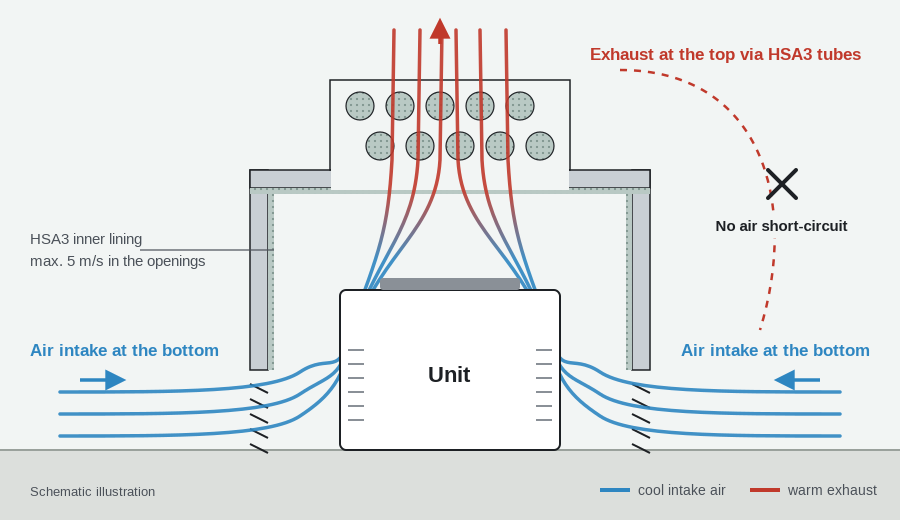
Storage systems, inverters and charging equipment derate in the heat. That is why we check the airflow with CFD before anything is built.
- Air intake at the bottom, exhaust at the top via HSA3 tubes
- Openings at max. 5 m/s – no flow noise, no heat build-up
- The unit does not draw in its own warm exhaust
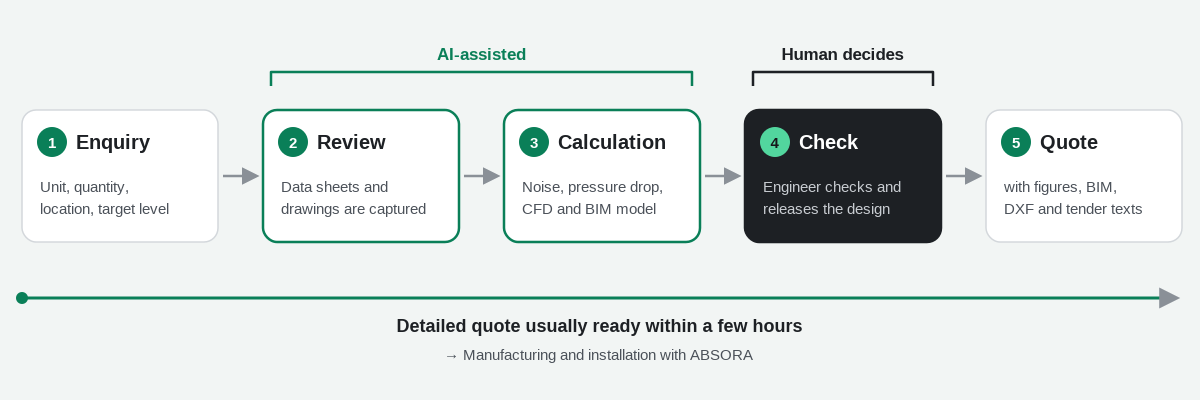
From enquiry to finished enclosure.
AI speeds up every step. Nothing is released until an engineer has checked the design.
- EnquiryUnit type, quantity, location and target level – by form, e-mail or via the configurator.
- AI-assisted reviewData sheets, drawings and requirements are captured and condensed into a first design proposal.
- CalculationAcoustics, pressure drop and airflow (CFD), plus the BIM model of the enclosure.
- Engineering checkPlausibility, standards, access and details – only then does the design go out.
- Quote and manufacturingDetailed quote; after the order, manufacturing and installation with ABSORA in Berlin.
What AI doesn't do here.
AI is a tool, not a substitute for experience. More than 500 enclosure projects since 2015 – that knowledge goes into every design.
- It makes no decision on its own – every design is checked and signed off by an engineer.
- It does not replace a noise forecast or measurement at the relevant receiver point.
- It does not invent device data – the manufacturer's figures are what count.
- We do not publish customer names or project locations – your installation is yours.
The configurator on forcotech.com.
Choose a unit, enter your requirements – and get guidance on air volume, air velocity and pressure drop, variant proposals, tender texts and BIM and DXF files.
Your project doesn't fit a standard box?
We design every enclosure individually – you usually receive the quote within a few hours.