Combustion engines
Noise control for combustion engines
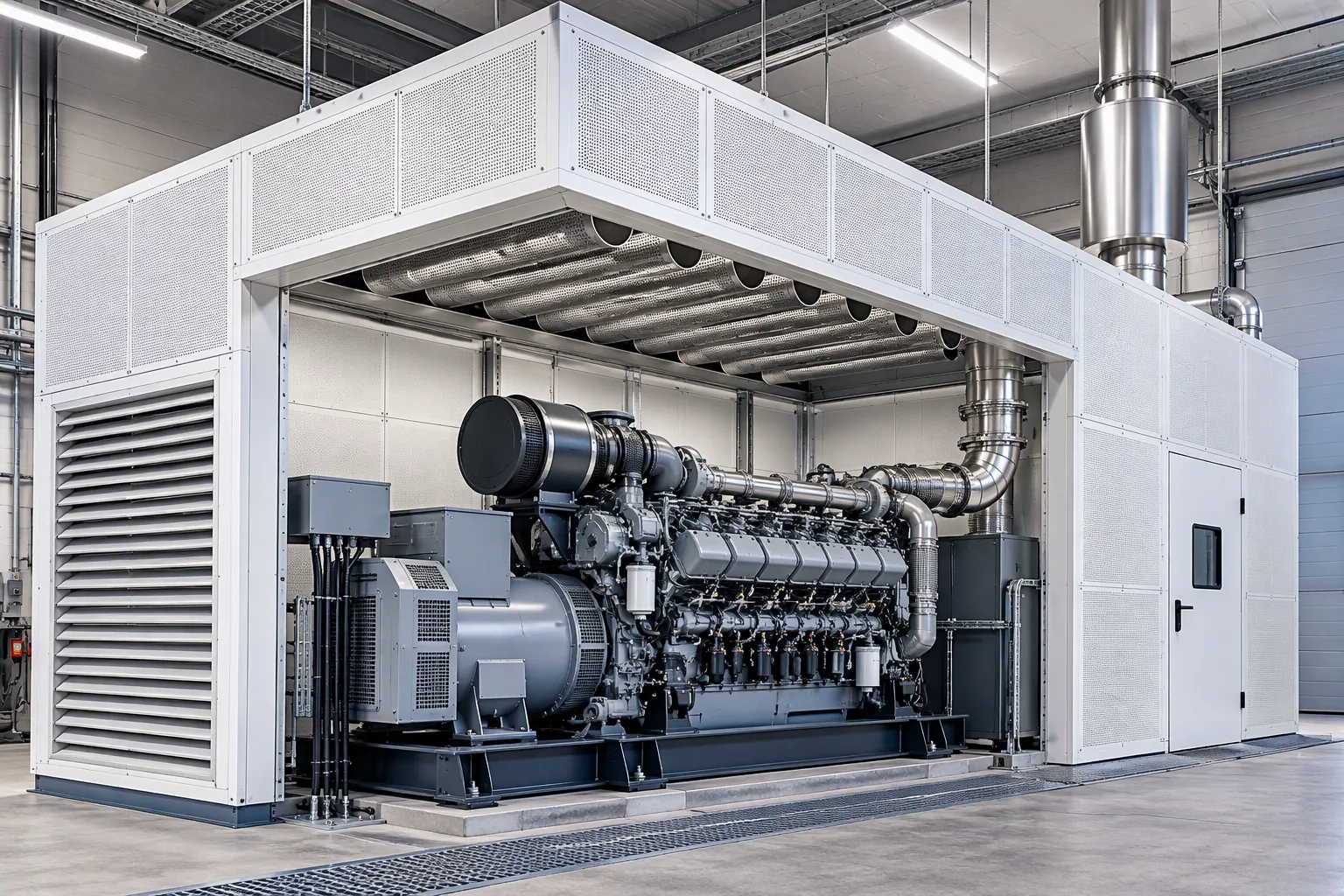
Stationary gas and diesel engines, engine test benches and compressor or pump drives produce low-frequency noise that carries far. We design intake and exhaust paths, intake chambers and enclosures so the engine gets the air it needs – and the neighbours get their peace.
Noise sources
Where an engine is loud.
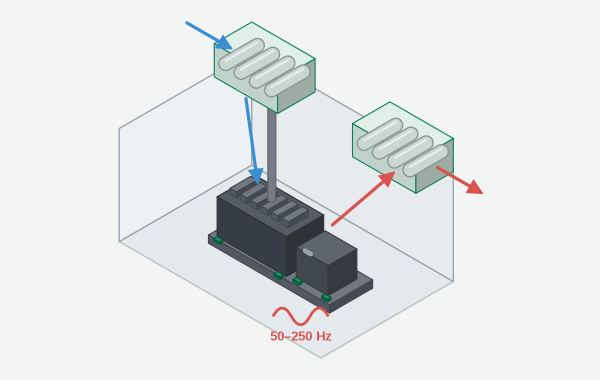
- Combustion airThe intake creates pulsations at the firing frequency – depending on speed and number of cylinders often between 50 and 250 Hz.
- Cooling airRadiators and hall ventilation move large volumes of air. Their openings are the largest noise outlets.
- Casing radiationEngine block, generator and gearbox radiate into the room; the noise escapes through openings.
- ExhaustThe exhaust silencer comes from the engine manufacturer or is supplied by others; we coordinate the exhaust routing through enclosure or hall.
Solutions
For halls, containers and test benches.
- Intake chambers and supply air systems for engine halls and test benches
- Intake and exhaust attenuators with HSA3 tubes – tuned to 63–250 Hz
- Enclosures for open engines, compressors and pump sets
- Retrofits of existing containers and halls
- Access for maintenance, refuelling and engine replacement
Why HSA3 suits engines
- Effective at low frequencies with a slim build-up
- Up to 40 % less pressure drop than splitter silencers – less back pressure for intake and radiator
- Non-combustible (A1), available fibre-free, cleanable instead of replaceable
- Metal, earthable throughout
For backup power systems see also Standby generators.
Helpful for your enquiry
- Engine: manufacturer, type, rating, speed, number of cylinders
- Combustion and cooling airflow, permissible back pressure
- Room or container dimensions
- Sound power or measured values
- Limit and distance to neighbouring buildings
Your project doesn't fit a standard box?
We design every enclosure individually – you usually receive the quote within a few hours.